
Your instance,
one keystroke away.
Chrome · Edge · Manifest V3
Most of the friction in ServiceNow is not the work. It is finding the record, remembering the table name, opening the script, checking which update set you are in. HolySN puts that part behind one shortcut.
▲ tt✓ dark theme on, every open tab retinted, no reload▲ sysid✓ sys_id copied to the clipboard▲ bg gs.info(gs.getUser().getName())✓ background script ran, output in the panel…and dozens more, all from Alt+Shift+P
Runs on
Chrome and Edge 128+
Packaging
Manifest V3, no remote code
What it does
Built for the work, not the demo.
Every one of these started as something that annoyed a ServiceNow developer enough to fix it. None of them is here because a competitor has it.
Palette
One prompt for the whole platform
Alt+Shift+P opens it on any ServiceNow page. Jump to a table, build a query, impersonate, run a background script, copy a sys_id, open the XML. The listener sits in the capture phase, so the platform cannot eat the keystroke.
Dark mode
A theme, not an inversion
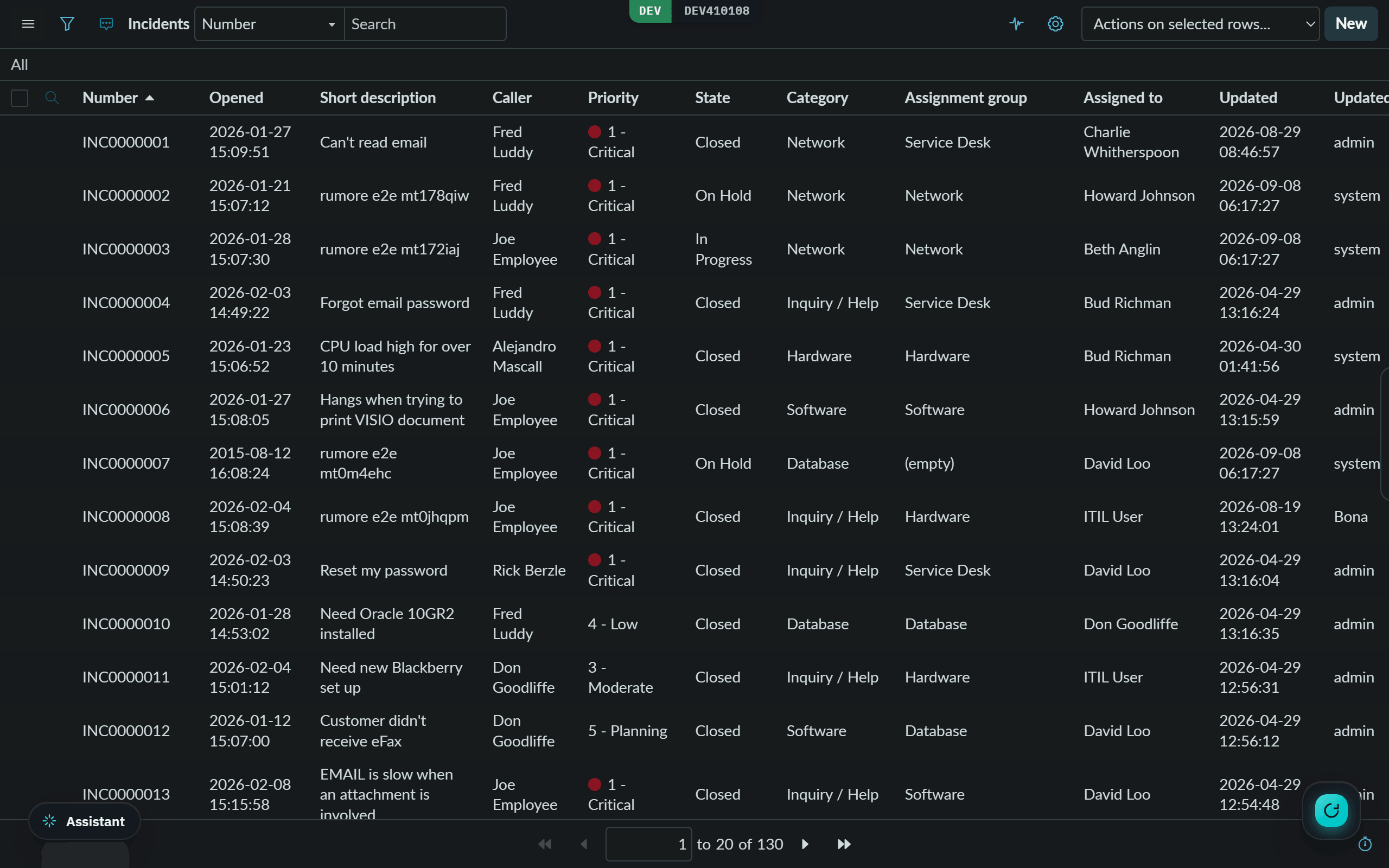
ServiceNow ships around 5,700 design tokens as flat RGB triples, so nothing cascades. HolySN recolours each one by what its name means: surfaces collapse onto a dark ramp, ink lightens, brand buttons keep their white text. Next Experience, classic lists and Service Portal, without a reload.
AI
An assistant that knows which instance you are on
The conversation exists from the moment you send it and follows you across tabs. Four permissions decide what it may touch, each one takes effect immediately, and none of them are on by default.
Vault
Credentials that stay ciphertext
AES-GCM under a key derived with PBKDF2 at 600,000 iterations. Only the blob and its labels ever sync; the passphrase is never stored or sent, and the page realm is never handed a secret.
Record
Record a click path, then prove it again
Capture what you did on a form or a catalog item and replay it later. Replay waits for facts rather than timeouts, and reports three outcomes instead of two, so an unknown stays an unknown.
Compare
See what actually changed
Line diff between record versions, and between the same artifact on two instances. The comparison is the answer to the question you were going to ask a colleague.
In motion
Twelve seconds each. No narrator.
Three things worth watching rather than reading. They loop, they are silent, and none of them is a tour.
Clip to record
A form open on an instance. Alt+Shift+P, then sysid typed into the palette. The id lands on the clipboard and the panel confirms it. No reload, no navigation away.
/demos/palette.mp4
The palette
What usually costs four clicks and a scroll costs a chord and three letters.
Clip to record
A list in the stock light theme. tt typed into the palette. The shell, the list, the form and every other open tab repaint together, in one pass, without a reload.
/demos/dark-mode.mp4
Dark mode, live
It re-values the platform's own tokens instead of inverting the page, so it lands as a theme rather than a filter.
Clip to record
A record being saved while the Default update set is active. The save is held, the panel names the set, and the right one is picked before the record is written.
/demos/update-set.mp4
The guard catching a mistake
The mistake that costs an afternoon of rework is stopped where it would have started.
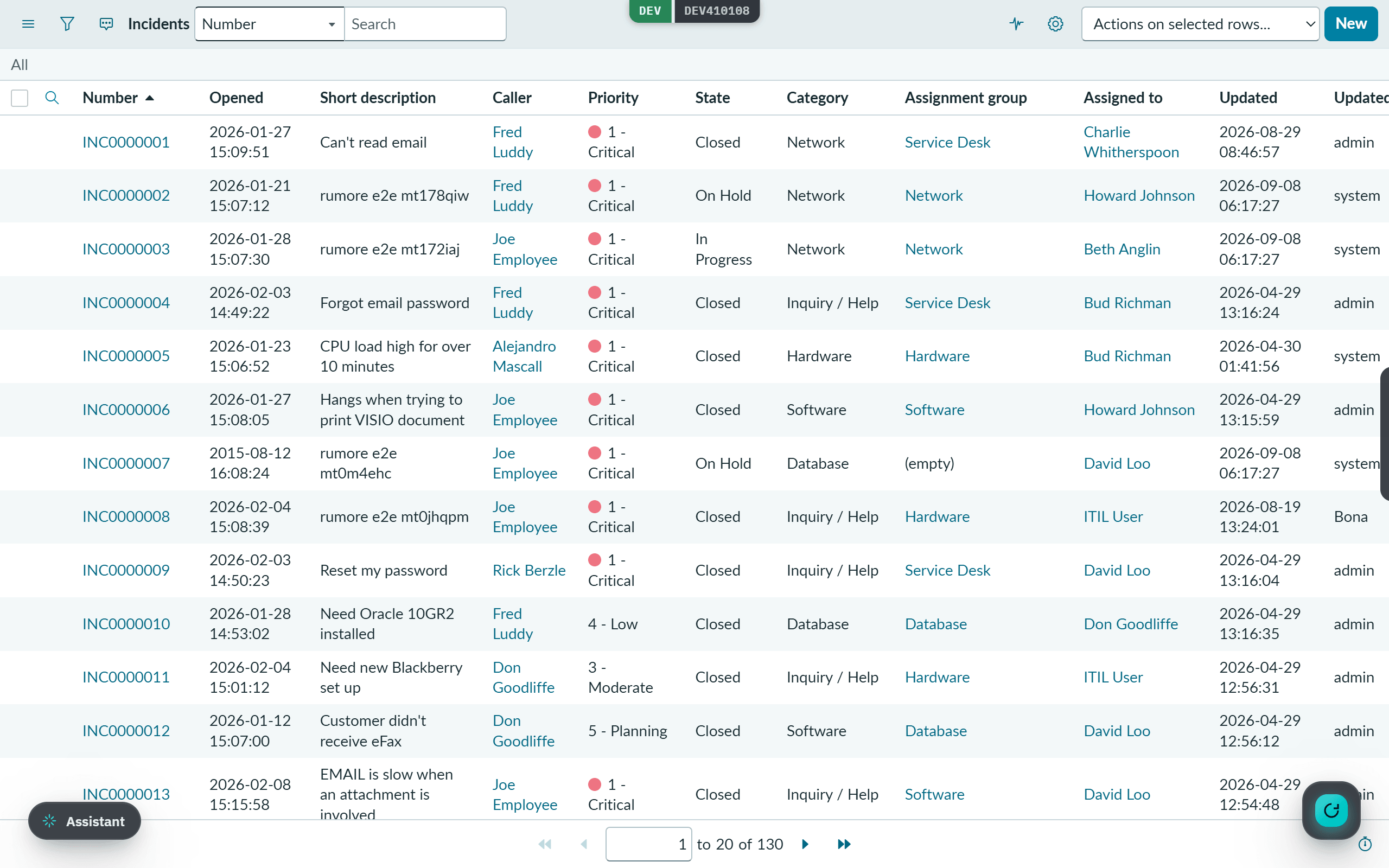
Dark mode
The same instance, repainted.
Not a filter over the page. The tokens the platform already ships are read and re-valued, so lists, forms and the shell all land on the ramp ServiceNow designed. Drag to compare.
Screens
It looks like this on a real instance.
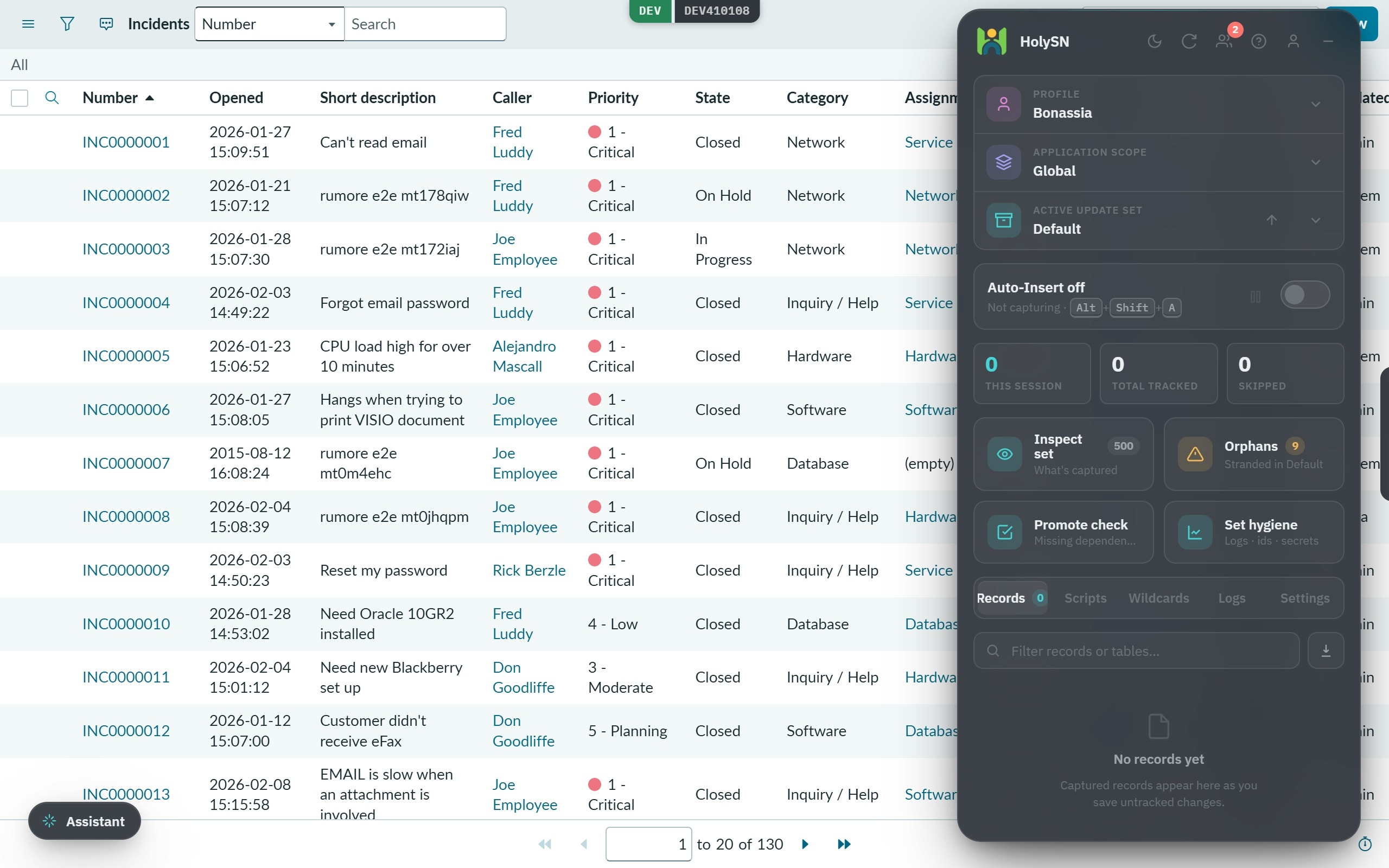
Records
The panel keeps the records you touched within reach.Security
Boundaries, measured.
The widget shares a realm with ServiceNow’s own scripts, so a forged message is always possible. Everything below is built on that assumption rather than against it.
Your credentials sync as ciphertext, and your AI conversations reach a server. Nothing else about your instance leaves the browser.
Host gate
The privileged worker re-derives an allowlist from the manifest and re-checks every fetch, cookie read and tab open against it. Suffix-confusion hosts, scheme downgrades and javascript: URLs are covered by 17 tests.
Vault
AES-GCM under a PBKDF2 key at 600,000 iterations. The server only ever holds the ciphertext and its labels. The passphrase is never stored and never sent.
Realms
Vault operations are not relayed to the page realm, so scripts running on the ServiceNow page cannot reach them, and cannot aim a stored credential at an instance of their choosing.
No remote code
Monaco is bundled with the extension rather than pulled from a CDN, so the editor loads from disk.
Questions
Before you ask.
- Which browsers does it run on?
- Chrome and Edge, version 128 or newer. The version floor comes from two APIs the extension needs: MAIN-world script injection and header rewriting through declarativeNetRequest.
- Is it on the Chrome Web Store?
- Not yet. Store review treats user-supplied scripts as remote code, which the Rules feature depends on, so the first channels are likely a self-hosted package and enterprise policy install. The waitlist is how you hear which one lands first.
- Does it change anything on my instance?
- Only what you ask it to. Reading is the default; the actions that write are the ones you invoke, and the AI assistant's four permissions all start off.
- There is already a Tampermonkey userscript. What is the difference?
- Same source. The extension is built from the userscript and adds what a userscript cannot do: dark mode across the instance, HttpOnly cookie access, and a worker that keeps privileged calls out of the page realm.
- Is this a ServiceNow product?
- No. HolySN is independent, and not affiliated with or endorsed by ServiceNow, Inc.
Waitlist
Hear the day it is installable.
One email when the first install channel opens. No newsletter, no drip sequence, and the address is stored for nothing else.